 K-BOOTH
Why Everyone Loves N Seoul Tower: Autumn Magic and Epic Views
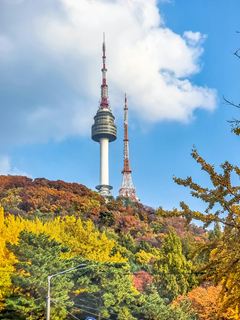
Photo: seonghak-hong / Unsplash
If you ask anyone who has visited Seoul to name their favorite city view, chances are they will point right to the center of the metropolitan skyline. Perched atop the forested slopes of Mount Namsan, N Seoul Tower rises gracefully into the sky, serving as both an orienting compass and an emotional heartbeat for the South Korean capital. On a crisp autumn morning under a spotless, bright blue sky, the landmark feels especially enchanting. The summit walkways and winding hillside paths burst into deep shades of crimson, bright amber, and golden yellow, creating a vivid seasonal frame around the towering structure.
Whether you are exploring Seoul for the very first time or returning after years away, N Seoul Tower offers an escape that feels both completely immersed in nature and closely tied to modern city energy. Looking up from the base, the tower looms against the sky while colorful autumn foliage shimmers softly out of focus in the background. It is easy to see why this hilltop destination draws millions of travelers, students, and locals throughout the changing seasons. To understand its magnetic appeal, one must look at how a functional communications antenna transformed into an enduring symbol of community, romance, and urban culture.
From Broadcast Beacon to Skyline Icon
The history of N Seoul Tower reflects South Korea's rapid modernization in the late twentieth century. Construction on the landmark originally began in December 1969, and the physical tower was completed in 1971. Designed by architect Jang Jong-ryul, the project was created as South Korea's first integrated transmission tower, built specifically to broadcast television and radio signals for major national networks like KBS, MBC, and SBS. Before its construction, broadcast signals struggled to navigate the ring of granite peaks that surround Seoul, making a high-altitude central transmitter essential.
For its first decade of operation, the tower remained closed to everyday visitors, functioning strictly as a broadcast facility. That changed in October 1980, when the observation areas were officially opened to the general public. Overnight, the communications mast became a beloved national viewpoint, giving citizens and visitors their first panoramic bird's-eye perspective of Seoul's rapid expansion. In December 2005, the structure underwent a massive renovation and was reintroduced with its current name, N Seoul Tower. The letter 'N' carries a threefold meaning: 'New' to mark the tower's modern rebirth, 'Namsan' honoring its natural mountain setting, and 'Nature' highlighting the park that shelters it.
 Take a 4-cut like this with your friends →
Sleek Architecture and Glowing Nighttime Signals
Architecturally, the tower is a lesson in elegant balance. The structure itself measures roughly 236.7 meters from base to antenna spire. However, because it sits atop Mount Namsan—which rises approximately 243 meters above sea level—the upper observation deck actually places visitors nearly 480 meters above sea level. This combined elevation makes the summit the highest physical viewpoint in central Seoul. The tower features a slender concrete column that expands into a multi-tiered circular pod containing observation lounges, dining spaces, and retail galleries, capped by an intricate lattice transmission mast.
Inside the complex, visitors can explore Seoul Tower Plaza on the lower levels before taking a high-speed elevator to the glass-walled observation deck. The deck provides an unobstructed 360-degree panorama of the entire Seoul basin. On a clear day, your eyes can trace the curves of the Han River flowing toward the horizon, gaze upon historic Joseon-era palaces tucked between glass skyscrapers, and spot the jagged granite peaks of Bukhansan National Park far to the north.
Once the sun sets, the architecture takes on an entirely new personality through an advanced digital LED illumination system. Rather than displaying random decorative patterns, the nighttime colors serve an ingenious civic purpose by showing real-time atmospheric data. Since 2011, the tower has functioned as a public air-quality monitor. A cool blue illumination indicates clear air with minimal fine dust. A green glow signals normal or moderate atmospheric conditions. When the air carries elevated dust levels, the tower shifts to yellow, and a bright red light alerts the city to severe microdust advisories. This clever integration of civic utility and art turns the night skyline into a living weather report visible from miles away.
Autumn Magic and Hilltop Celebrations
While N Seoul Tower is popular year-round, autumn transforms the mountain into something out of a watercolor painting. The seasonal transition peaks from late October through early November, when Mount Namsan's dense forest becomes a tapestry of scarlet maples, fiery sumacs, and golden ginkgo trees. The famous Namsan Dulle-gil trail, a gentle path that encircles the waist of the mountain, turns into an arching tunnel of leaves where sunlight filters through warm canopy foliage onto peaceful wooden resting decks.
The mountain hosts diverse seasonal activities during this vibrant window. The Seoul Metropolitan Government and local park authorities organize annual autumn festival programs along Mount Namsan, offering guided nature tours, family craft workshops like wildflower weaving, and open-air photography exhibitions along the forested walking paths. Cultural events often congregate around the traditional Palgakjeong octagonal pavilion near the tower entrance, where visitors can watch traditional performances against a backdrop of sweeping city vistas.
No discussion of the tower is complete without mentioning the famous Locks of Love on the outdoor observation terraces. Inspired by romance traditions around the globe, visitors from across the world attach colorful padlocks to the metal railings, writing heartfelt personal wishes, initials, and commemorative messages. In the autumn breeze, thousands of brightly colored locks catch the afternoon sun against a panoramic backdrop of autumn foliage below, creating a unique symbol of friendship, romance, and shared travel memories.
Practical Tips for Your Hilltop Adventure
Reaching N Seoul Tower is half the adventure, with several scenic transport options available depending on your pace and energy level:
- Take the Namsan Cable Car: Operating since 1962, this aerial cable car carries riders from the mountain base near Hoehyeon and Myeongdong up toward the summit, offering an aerial view of the autumn canopy unfolding underneath.
- Ride an Eco-Friendly Shuttle Bus: Designated circular buses connect major central subway stations, including Seoul Station and Chungmuro Station, directly to the tower summit parking area via scenic winding mountain roads.
- Hike the Historic Mountain Trails: For those who love walking, well-maintained stone steps follow the ancient Seoul City Wall from Baekbeom Square through wooden stairways shaded by ginkgo and maple trees.
To make the most of your excursion, timing is everything. Arriving in the mid-afternoon allows you to wander the forested trails in warm daylight, photograph the brilliant autumn colors against the blue sky, and secure a spot on the viewing terrace just in time for sunset. Watching the city transition from dusk to evening as the tower illumination clicks on is an unforgettable highlight of any Seoul trip.
Wear sturdy walking shoes and bring a lightweight windbreaker. Summit breezes on Mount Namsan can get quite brisk once the sun sets, even after a pleasantly warm autumn afternoon.
Take a 4-cut photo with your friends here, wherever they are.