 K-BOOTH
Sunrise at Seongsan Ilchulbong: Jeju's Volcanic Dawn
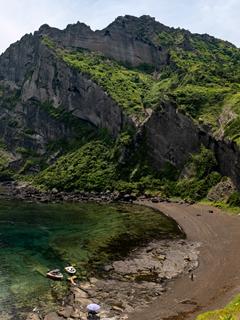
Photo: lightscape / Unsplash
Before the rest of Jeju Island wakes up, a steady line of flashlights moves quietly along the eastern coast. The morning air feels sharp with the salt spray of the sea, and the horizon is still inked in deep indigo. Ahead rises the unmistakable silhouette of Seongsan Ilchulbong, a colossal volcanic fortress jutting out into the ocean. Reaching the rim just as the first sliver of golden light breaks across the water is one of the most unforgettable travel experiences in South Korea.
Known in English as Sunrise Peak, Seongsan Ilchulbong is widely celebrated for offering one of the finest dawn panoramas in the country. From the edge of its massive crater bowl, you can watch the sky shift from pale violet to molten amber while waves lap against black basalt cliffs hundreds of feet below. Whether you are an outdoor enthusiast, a geology buff, or simply a traveler looking for an awe-inspiring start to the day, this natural wonder delivers an encounter with the raw, untamed side of Jeju.
Born from Fire and Water: A Geological Wonder
Seongsan Ilchulbong is not your typical volcano. Rather than forming from a quiet accumulation of lava flows on dry land, it was born from a violent collision between magma and water roughly 5,000 years ago. Scientists call this process a hydrovolcanic or hydromagmatic eruption. As superheated magma surged upward from beneath the seabed, it met the cold waters of the shallow ocean. The resulting steam explosions pulverized the magma into fine, damp volcanic ash, which rained down around the vent to construct a steep, bowl-shaped tuff cone.
Today, the summit reaches approximately 182 meters above sea level. At the very top lies a giant depression spanning roughly 600 meters across and about 90 meters deep. Instead of molten rock, the crater floor is lined with lush green grass, wildflowers, and silvery reeds. Enclosing this vast green arena are 99 sharp, jagged rock spires that crown the rim like the ramparts of a medieval castle. It is this fortress-like profile that gave the formation its name: "Seongsan" translates directly to Fortress Mountain, while "Ilchulbong" means Sunrise Peak.
Because ocean currents and crashing waves continuously carved away its outer walls, the peak displays exceptionally clear, exposed layers of volcanic sediment. Geologists from around the globe consider it one of the premier examples of a marine tuff cone in existence. In recognition of its rare structure and dramatic natural beauty, the peak was inscribed as a UNESCO World Natural Heritage site in 2007 as part of the Jeju Volcanic Island and Lava Tubes, and it is also designated as a key site within the Jeju Island UNESCO Global Geopark.
 Take a 4-cut like this with your friends →
Stories, Coastal Traditions, and Sea Divers
Seongsan Ilchulbong has long occupied a special place in Jeju’s cultural identity. For centuries, local scholars and poets ranked the sunrise seen from the summit as the first and most dazzling of the "Ten Scenic Views of Jeju". Originally an isolated island out in the water, the formation gradually joined the mainland over centuries as coastal currents deposited ridges of sand, gravel, and shell sediment, creating the narrow causeway that visitors walk across today.
Down along the curved cove at the foot of the cliffs lies Umutgae Beach, where the ocean reveals another living treasure of the island: the Haenyeo. These traditional women freedivers harvest sea urchins, conch, abalone, and octopus from the rocky seabed without the use of oxygen tanks, relying solely on masks, lead weights, and years of breath-holding practice. Visitors who walk down the winding wooden boardwalk to the cove can often catch scheduled diving demonstrations or observe the divers setting out to sea in their gear, keeping a centuries-old heritage alive beneath the towering volcanic walls.
Welcoming the Dawn: The Seongsan Sunrise Festival
Watching the first sunrise of the year holds deep meaning in South Korea, where the dawn is seen as a clean slate for setting fresh intentions and wishing for health and good fortune. As the easternmost major mountain feature on Jeju, Seongsan Ilchulbong serves as the ultimate gathering place for this tradition.
Every year from New Year's Eve into New Year's Day, the area hosts the Seongsan Sunrise Festival. Established in the mid-1990s, this festive winter gathering draws crowds from across the country. The celebrations feature lively outdoor performances, traditional drumming, torch-lighting ceremonies, and a collective countdown to midnight. In the dark pre-dawn hours that follow, festival-goers make their way up the trail or gather along nearby beaches to catch the first sunbeams of the new year breaking over the horizon.
Climbing to the Rim: What the Hike Is Really Like
If you are worried about needing heavy backcountry gear, you can breathe easy. The climb up Seongsan Ilchulbong is short and direct, following a well-engineered staircase made of treated wood and stone steps. The entire ascent usually takes between twenty and thirty minutes at a steady pace.
That said, the trail is a continuous uphill stair workout that will definitely warm up your calves. Along the way, several observation decks provide ideal spots to catch your breath and look back over the landscape. As the darkness softens into twilight, you can spot the connected isthmus of Seongsan village, the sweeping curve of Gwangchigi Beach, and the outline of neighboring Udo Island resting on the water.
Once you arrive at the summit, you reach a tiered wooden viewing deck built right along the edge of the crater. Looking inward, you gaze over a massive verdant amphitheater that feels like a hidden world. Looking outward, the open East Sea stretches to the horizon. As the sun crests the ocean, the grassy bowl glows in vibrant emerald while the coastal water turns from deep slate blue to brilliant gold.
Practical Tips for Sunrise Chasers
To make the most of your early morning adventure on Sunrise Peak, a little planning goes a long way:
- Check the exact sunrise time online the evening before, and aim to arrive at the base gate at least 45 to 50 minutes before dawn so you have ample time to hike and find a comfortable viewing spot.
- Dress in flexible layers, as morning ocean breezes can feel quite chilly at the top even in mild weather, while the continuous climb will quickly warm you up.
- Wear supportive athletic shoes or light hiking sneakers, since the stairs can occasionally be damp with morning dew or coastal mist.
- Stay overnight in Seongsan-ri village at the foot of the peak if possible; being within walking distance eliminates the stress of catching an early-morning bus or pre-booking a dawn taxi.
- Follow the designated one-way loop system: you climb up via the southern trail and descend via the scenic coastal path that brings you toward the diving cove and open ocean views.
After coming down from the summit, do not leave right away. Follow the lower coastal boardwalk down to the shoreline cove to view the dramatic layered sea cliffs from sea level, and take a peaceful morning stroll along the nearby black sands of Gwangchigi Beach to see the entire volcanic fortress framed against the morning sky.
Take a 4-cut photo with your friends here, wherever they are.