 K-BOOTH
Seoul Street Food You Can’t Miss: Hidden Bites in Bustling Alleys

Photo: choe / Pixabay
Step out of almost any subway station in Seoul around sunset, and the city’s pace suddenly shifts. Commuters, students carrying backpacks, and lively groups of friends pause their journeys, guided by the sweet aroma of simmering chili sauce and the sizzle of hot griddles. Seoul’s culinary soul lives out in the open air, tucked inside neon-lit backstreets and beneath the bright canopies of street carts. Wandering into these bustling alleys is not just about grabbing a quick snack; it is an immersive look into how the city unwinds, socializes, and connects over steaming comfort food after a long day.
The Cozy Culture of Pojangmacha and Street Carts
Street carts and covered food stalls, traditionally called pojangmacha, have anchored Seoul’s neighborhoods for generations. The word translates literally to 'covered wagon,' referencing the classic tent-like setups wrapped in orange or transparent vinyl that shelter diners from chilly winds. While full-sized sit-down tents cater to evening crowds sharing drinks and savory plates, smaller standalone carts line high-traffic sidewalks and market arcades, serving everyday street snacks known locally as bunsik.
What makes these stalls so magnetic is their communal ease. There are no formal hosts, no reservations, and very little waiting. You simply step up to the edge of the cart, stand shoulder-to-shoulder with strangers, and watch the vendor ladle bubbling sauces or toss fresh batches of snacks into hot oil. For Seoulites, visiting a favorite cart on the walk home from work or academy classes is an ingrained ritual—a warm, grounding pause in an otherwise ultra-fast metropolis.
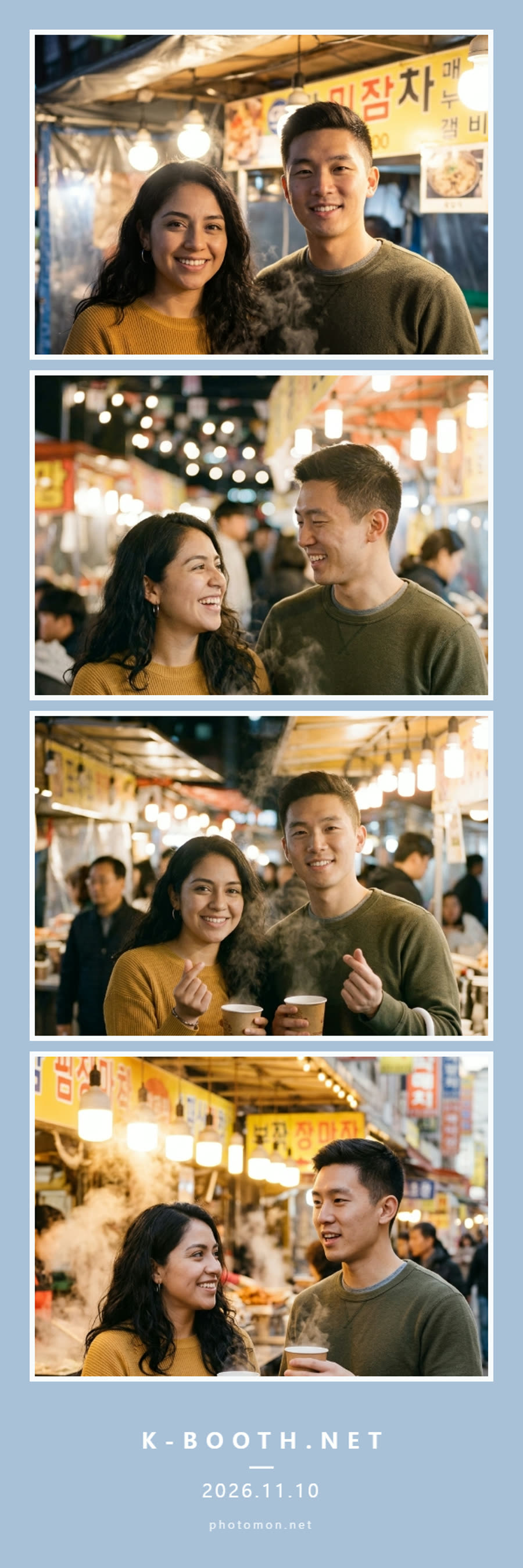 Take a 4-cut like this with your friends →
The Holy Trinity: Unpacking Tteok-Twi-Soon
If you ask any local what to order first at an alley snack cart, you will almost certainly hear the shorthand word 'tteok-twi-soon'. This beloved portmanteau combines the names of three iconic dishes that vendors have served together for decades. While you can order any of them individually, enjoying them side by side represents the ultimate harmony of textures and flavors.
- Tteokbokki: Cylindrical rice cakes simmered slowly in a thick, glossy sauce made from gochujang (Korean chili paste), gochugaru (chili flakes), and a touch of sweetness. The rice cakes are wonderfully chewy, absorbing the savory heat of the sauce alongside folded strips of fish cakes and sliced scallions.
- Twigim: Korean-style battered and deep-fried bites displayed in crisp golden mountains at the front of the cart. Options typically include sweet potato slices, tender squid, vegetable clusters, and gimmari—seasoned glass noodles wrapped tightly in seaweed sheets before being fried to an airy crunch.
- Sundae: Traditional Korean sausage made primarily by filling natural casings with tender cellophane noodles, pork blood, and aromatics before gently steaming them. Served sliced into thick medallions, it carries a mild, earthy flavor and pairs wonderfully with steamed liver or lungs.
The real secret to eating like a local lies in the sauce pairing. Instead of dipping your fried twigim or steamed sundae solely in soy sauce or seasoned salt, you use the tteokbokki pan. Vendors happily spoon extra spicy red gravy over your platter, allowing the crispy batter of the fried fritters and the tender noodles inside the sundae to soak up every drop of vibrant chili flavor.
Standing by the Steam: The Art of Fish Cake Broth
Nothing defines Seoul’s cooler evenings quite like eomuk. These savory fish cake ribbons are folded accordion-style onto long wooden skewers and submerged in rectangular stainless steel vats. The fragrant broth—simmered with dried kelp, anchovies, daikon radish, and leeks—steams constantly, warming everyone who gathers around the stall. It offers an instantaneous, comforting reset during brisk autumn winds or snowy winter nights.
Eating eomuk has its own effortless, unspoken choreography. When you step up to the cart, you pick a skewer directly from the simmering pool and brush it with seasoned soy sauce using the vendor's small dipping brush. Beside the bubbling vat, stacks of small paper cups sit waiting. Customers freely use a metal ladle to scoop piping-hot broth directly into their cup to sip between bites. The broth is communal, soothing, and acts as a delicate palate cleanser between rounds of spicy snacks.
Always save your empty wooden skewers while eating at a standing cart. When you finish, the vendor quickly tallies how many sticks you have held to keep track of your order, so never discard them into a trash bin until after the vendor concludes your order.
Crispy and Sweet: Warm Alleyway Desserts
While savory snacks dominate early evenings, sweet treats draw massive crowds as night sets in. The aroma of caramelized sugar and baking batter drifts down market alleyways, signaling the presence of vendors operating specialized griddles and cast-iron presses. These sweet bites are designed to be held in folded cardboard holders or small paper cups, making them easy to enjoy on a stroll.
- Hotteok: A yeasted dough ball stuffed with brown sugar, cinnamon, and crushed nuts like walnuts or sunflower seeds. The vendor drops it onto a shallow pool of sizzling oil, flattening it with a round stainless press until both sides turn golden-brown and crispy, creating a molten, syrupy core inside.
- Bungeoppang: Golden, waffle-like batter poured into charming carp-shaped iron molds. While classic versions are filled to the tail with sweet red bean paste, modern stalls also offer rich vanilla custard cream, chocolate, or sweet potato puree.
- Gyeranppang: Often referred to as egg bread, this oval pastry features a mildly sweet, fluffy cornmeal-style pancake base with a whole egg cracked directly on top, baked until the white is tender and the yolk is rich and savory.
Local Etiquette for Navigating the Stalls
Walking into an energetic alley stall can feel intimidating if you do not speak Korean, but vendors are accustomed to quick, efficient communication. Seoul’s street food culture prioritizes speed and convenience, yet a few basic manners help keep the line flowing smoothly and ensure an authentic local experience.
- Eat near the cart: Unlike in cities where eating while strolling is common, Koreans usually finish street snacks right beside the cart where they picked them up, stepping slightly to the side so other hungry pedestrians can approach.
- Keep communal condiments tidy: When brushing soy sauce onto skewers or reaching for pickled yellow radish, use the provided brushes or tongs rather than double-dipping, keeping the shared station clean for fellow diners.
- Hand back your waste: Most stalls provide a small bin underneath the counter or near the prep station for paper cups, skewers, and napkins. Handing your used paper cups back or placing them neatly into the vendor’s bin shows great respect for their workspace.
Whether you are ducking under an orange tent in Euljiro, wandering through the lantern-lit corridors of Gwangjang Market, or standing at a subway station cart in Hongdae, Seoul's street food represents the city at its warmest. Every skewer, crispy fritter, and steaming cup of broth tells a story of urban tradition—served hot, fast, and directly from the heart.
Take a 4-cut photo with your friends here, wherever they are.