 K-BOOTH
Gyeongju Hails: How Locals Say Hello in Korea's Ancient Capital

Photo: laszlo-oveges / Unsplash
Strolling through the historic alleys of Gyeongju, where ancient royal burial mounds rise against the skyline and quiet tea houses neighbor hip cafes along Hwangnidan-gil, you quickly realize this historic city moves to its own tempo. While standard Korean textbooks focus on the speech patterns of Seoul, everyday life in southeastern South Korea has an entirely different sound. This regional speech, known as the Gyeongsang dialect or satoori, carries a dynamic cadence, punchy contractions, and deep everyday warmth.
To visitors hearing it for the first time, Gyeongsang speech can sound surprisingly brisk or direct. However, beneath that lively rhythmic cadence lies authentic hospitality. In Gyeongju, people rarely rely on stiff, scripted greetings to connect. Instead, everyday hellos center around thoughtful check-ins about food, travel direction, and personal well-being. Learning how locals greet each other helps you experience the genuine pulse of the city, whether you are chatting with a guesthouse owner, greeting an artisan, or making friends near Daereungwon.
The Melody of Gyeongsang Satoori
Gyeongju once served as the capital of the ancient Silla Kingdom for nearly a thousand years, making it one of the most culturally significant cities on the Korean Peninsula. Today, as a key city in North Gyeongsang Province, its regional dialect retains distinct linguistic traits that set it apart from standard Seoul Korean. Most notably, Gyeongsang speech features pitch accents, where rising and falling musical tones help convey nuance, emotion, and question types.
Another defining characteristic is efficient contraction. Sentences are trimmed down to their essential sounds, shedding extra syllables to keep conversations swift and straightforward. Locals take pride in this directness. Friendly exchanges here do not depend on ornate flourishes; instead, they show connection through immediate, sincere curiosity about what you are up to right now.
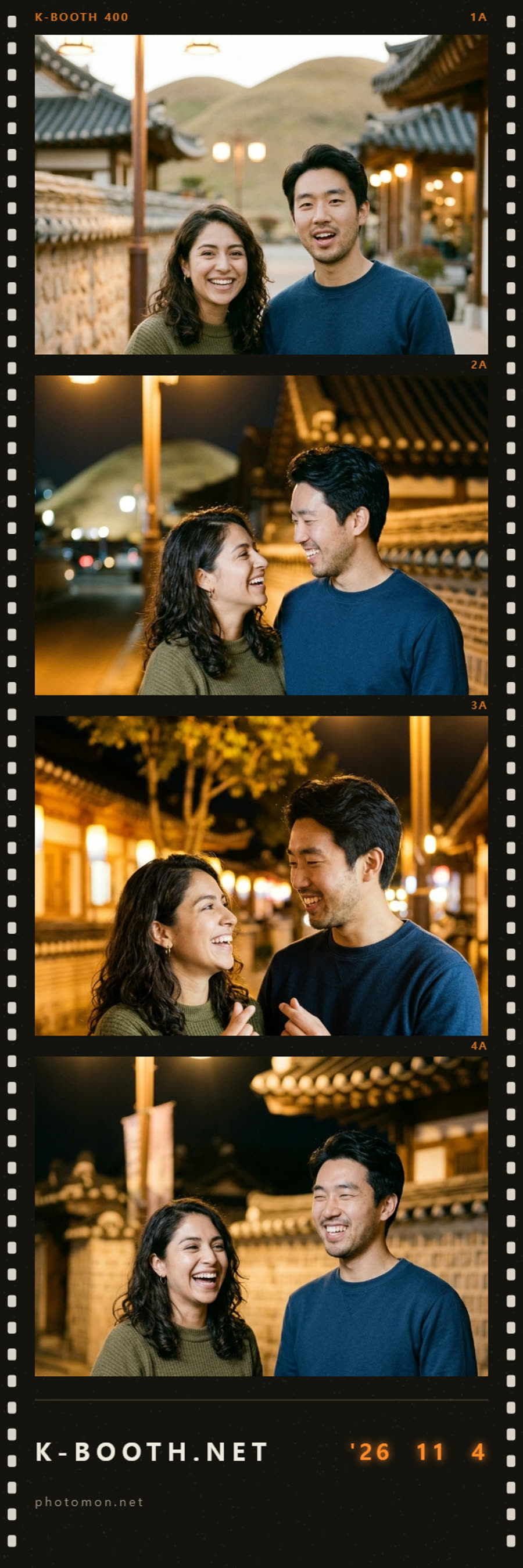 Take a 4-cut like this with your friends →
Everyday Check-Ins: Food and Footsteps
In Korea, asking whether someone has eaten is a universal gesture of care, but in Gyeongju, the phrasing takes on an iconic regional flavor.
"밥 뭇나?" (Bap munna?) — Did you eat?
This is easily the most recognized greeting in southeastern Korea. Rather than asking a generic question about your day, local friends, guesthouse hosts, and market stall keepers will often toss this phrase your way the moment you walk through the door. In standard Korean, this question is phrased as bab meogeosseo, but here it condenses into three crisp syllables. The pitch typically rises on the first syllable and descends smoothly. When someone asks you this, they are showing personal affection and making sure you are well-nourished. Answering with an enthusiastic smile and confirming that you have eaten is the customary response.
"어데 가노?" (Eode gano?) — Where are you headed?
If you cross paths with an acquaintance or shopkeeper on the sidewalk, this greeting frequently replaces a standard hello. In the local dialect, standard eodi (where) shifts to eode, and the question takes the dialect-specific ending no. You do not need to share an exact itinerary or detailed plans. Much like an informal American "Heading out?", it functions as a friendly nod to someone who is out and about. Replying simply with your general destination, like the bakery or park, keeps the conversation easy and relaxed.
Meeting Up and Keeping the Energy Flowing
When young locals meet to hang out near historic sites or along cafe-lined streets, casual conversations flow with unpretentious rhythm.
"왔나?" (Wanna?) — You made it?
When friends meet at a planned spot, they rarely greet each other with standard pleasantries. Instead, they drop this quick, two-syllable greeting. Derived from the verb for arriving, it translates naturally to "Are you here?" or "You made it!" You will hear it thrown back and forth across cafe benches and bike rental stands. It is effortless, breezy, and casual. Because it uses informal speech, remember to save this phrase exclusively for peers of your own age or close buddies.
"맞나?" (Manna?) — Really?
While technically a reaction phrase, this expression acts as essential conversational glue across Gyeongju. Standard Korean speakers often say geurae or jinjja to show active listening, but locals here rely heavily on this punchy expression. Depending on your tone and inflection, it can indicate genuine surprise, energetic agreement, or friendly encouragement to keep the story going. Using it at the right moment shows you are actively engaged in the conversation.
Warm and Thoughtful Parting Words
Saying goodbye in Gyeongju carries just as much regional personality as saying hello, emphasizing personal safety and rest.
"잘 가래이" (Jal garaei) — Take care on your way.
Standard Korean typically relies on polite departure phrases like annyeonghi gaseyo. However, among local elders speaking to younger people, or between familiar neighbors, parting words often take on elongated regional vowels. This gentle farewell softens the goodbye with parental warmth and concern. You will often hear market vendors call this out with a wave as you walk away from a street-food stall into the evening air.
"드가소" (Deugaso) — Go inside safely.
When walking someone back to their guesthouse entrance or front steps at night, locals frequently favor this phrase over standard farewells. Originating from the verb meaning to enter, it serves as an affectionate wish for the other person to step indoors safely and rest well. It reflects a traditional neighborhood spirit where making sure someone gets home safe is the ultimate sign of good manners.
Navigating Local Etiquette as a Traveler
Exploring regional dialects is one of the most rewarding parts of travel, but knowing how and when to use local slang ensures respectful interactions.
- Stick to standard politeness with strangers: Korean language relies on speech levels based on age and social distance. Casual dialect phrases work best among peers or when someone invites informal conversation.
- Combine words with respectful body language: A slight head nod, warm eye contact, and relaxed posture help bridge linguistic differences and show sincere respect.
- Listen to the local rhythm first: Spend your first morning listening to how residents at local markets and cafes chat before trying out new expressions yourself.
- Embrace the hospitality: When a local asks if you have eaten, take it as an invitation to share a brief, cheerful chat about your favorite local foods.
If you are ever unsure whether a dialect phrase fits the setting, stick to a polite standard greeting with a warm smile. Gyeongju locals genuinely appreciate travelers who show curiosity about their regional speech, and your respectful effort will always be welcomed.
Take a 4-cut photo with your friends here, wherever they are.