 K-BOOTH
Bulguksa in Autumn: A Dreamy Escape to Gyeongju
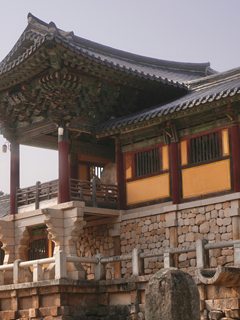
Photo: laszlo-oveges / Unsplash
If you are planning an autumn journey through South Korea, Gyeongju deserves a spot at the very top of your list. Often called a museum without walls, this historic city in the southeastern province of Gyeongsangbuk-do was the glorious capital of the ancient Silla Kingdom for nearly a millennium. While Gyeongju is captivating all year round, something entirely magical happens when the cool breeze of October and November settles across its rolling hills. The crown jewel of this autumn spectacle is Bulguksa, a mountaintop Buddhist sanctuary nestled on the slopes of Tohamsan.
Standing outside Bulguksa during peak foliage season feels like stepping straight into a classic painting. Sweeping stone terraces rise from the forest floor, framed by centuries-old wooden pavilions painted in rich mineral tones. Overhead, fiery red Japanese maples and towering golden ginkgo trees create a vibrant canopy, dropping a carpet of leaves across stone plazas and mossy borders. For travelers seeking peaceful reflection, deep cultural heritage, and postcard-perfect seasonal views, Bulguksa offers an unforgettable escape.
An Eighth-Century Dream of the Silla Kingdom
To truly appreciate Bulguksa, it helps to understand the visionary world from which it grew. Construction of the temple complex began in 751 CE during the reign of Silla's King Gyeongdeok, directed by Prime Minister Kim Daeseong. Legend holds that Kim Daeseong undertook the immense project out of deep devotion, seeking to honor the memory of his ancestors and create an earthly paradise for the people of Silla. The temple took over two decades to finish, finally reaching completion in 774 CE.
The name Bulguksa literally translates to "Temple of the Buddha Land," and every detail of the layout was designed to embody an ideal spiritual realm brought down to earth. Although many of the original wooden structures suffered devastating fire damage during the Japanese invasions of the late sixteenth century, the core stone foundations endured intact. Careful, rigorous restoration efforts throughout the twentieth century brought the wooden halls back to life, honoring authentic traditional architectural methods. In 1995, UNESCO recognized the extraordinary historical and artistic significance of Bulguksa and the neighboring Seokguram Grotto by declaring them World Heritage Sites.
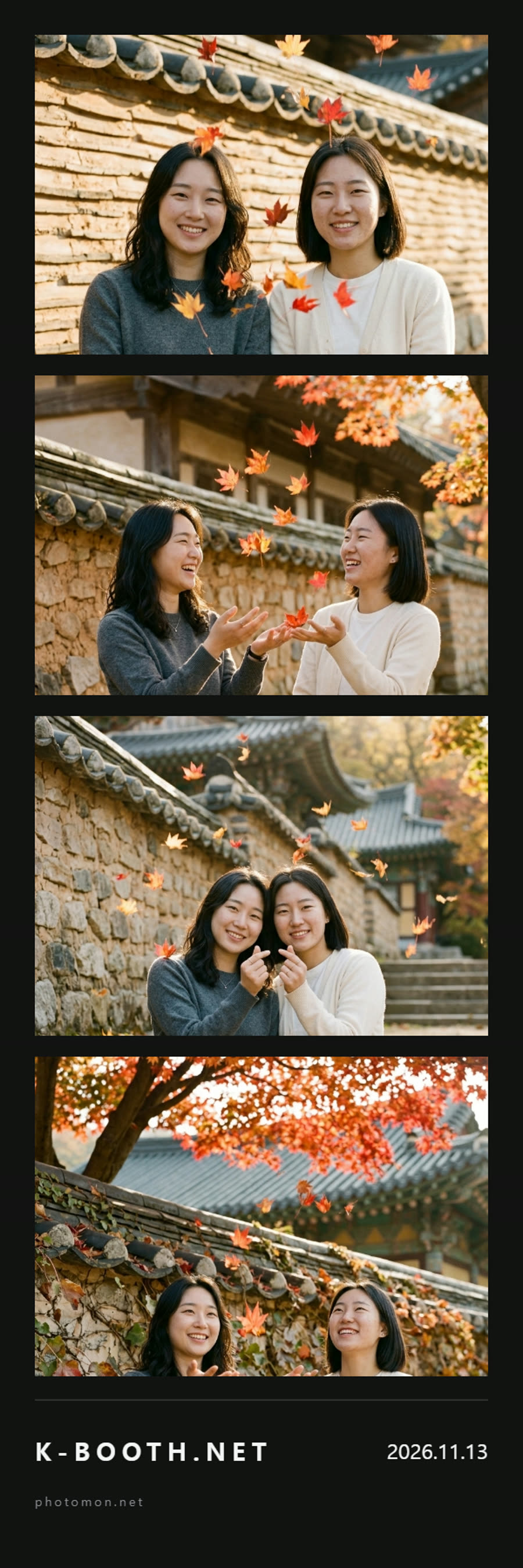 Take a 4-cut like this with your friends →
Architectural Wonders: Cloud Bridges and Twin Pagodas
The approach to Bulguksa reveals one of the most stunning architectural façades in East Asia. The temple is elevated on massive, beautifully assembled stone terraces designed to mimic an earthly mountain leading toward heavenly clouds. The most famous feature of the exterior is the grand stairway known as Cheongungyo and Baegungyo—the Blue Cloud and White Cloud Bridges. These thirty-four stone steps are not merely stairs; they were ingeniously crafted as bridge spans, complete with graceful rainbow arches carved underneath. Crossing them symbolically transported worshippers from the mundane world below into the sacred realm of the Buddha above.
Just west of the Cloud Bridges lies another historic pair of stone stairways, Yeonhwagyo and Chilbogyo, meaning the Lotus Flower and Seven Treasures Bridges. Step treads on Yeonhwagyo were delicately engraved with lotus petal motifs. Beyond the staircases sits Jahamun, the Purple Mist Gate, which leads visitors into the central courtyard of Daeungjeon, the Great Enlightenment Hall. Here stand two of Korea’s most revered stone monuments: Dabotap and Seokgatap.
These twin granite pagodas face one another, showcasing deliberate and striking contrast. Dabotap features an intricate, ornate design adorned with complex pillars, balustrades, and multi-tiered stone carvings. By contrast, Seokgatap exhibits refined, minimalist proportions with clean geometric lines, representing timeless serenity and restraint. Seeing these ancient granite wonders framed by branches of brilliant crimson maple leaves is a quintessential Korean autumn memory.
Autumn Magic and Regional Traditions
While spring brings soft cherry blossom clouds to Tohamsan, autumn brings a rich, multi-layered warmth that feels deeply grounded. Foliage across Gyeongju typically starts shifting colors in mid-October, reaching its golden peak from late October through the middle of November. The mountain breeze carries the subtle aroma of pine needles and damp earth, punctuated by the rhythmic resonance of the temple’s bronze bell calling across the valley.
Autumn is also the cultural high season across Gyeongju. Each October, the city hosts the Silla Cultural Festival, bringing traditional folk music, street performances, and ancient martial arts demonstrations to the city's historic avenues. Visiting Bulguksa during this festive season allows travelers to experience both quiet spiritual tranquility on the mountainside and vibrant celebrations in the city below.
Essential Tips for Your Autumn Temple Walk
Making the most of your excursion to Bulguksa is simple with a little advance planning. Here are practical pointers to ensure a seamless visit:
- Arrive Early in the Morning: Bulguksa is one of the country's most cherished landmarks, and daytime crowds can grow quickly. Arriving right when grounds open allows you to enjoy quiet courtyards, serene photo angles, and soft morning sunlight filtering through the trees.
- Take Local Transit: Direct public city buses run frequently from downtown Gyeongju and Gyeongju KTX Station right to the base of Bulguksa, eliminating the need to navigate winding mountain roads or search for parking.
- Dress in Layers with Comfortable Shoes: Morning temperatures on Tohamsan can feel crisp before warming significantly by midday. The grounds feature cobblestone paths, gentle inclines, and stone steps, so sturdy walking shoes are a must.
- Practice Temple Etiquette: Speak softly throughout the temple grounds, refrain from running, and always remove your shoes before stepping inside any active worship hall. Photography is prohibited inside prayer halls out of respect for worshippers.
- Extend Your Route: A scenic local shuttle bus and a forested mountain trail connect Bulguksa to Seokguram Grotto higher up Tohamsan, making it easy to see both UNESCO sites in a single morning.
After exploring Bulguksa, take a local bus back toward central Gyeongju to spend your afternoon in the Hwangridan-gil neighborhood. Its converted traditional tile-roof alleys are packed with indie cafes, seasonal warm persimmon teas, and artisan bakeries—the perfect cozy wind-down to an autumn day.
Take a 4-cut photo with your friends here, wherever they are.